- The Galley
- Posts
- Airlines rethink F&B as a strategic profit lever
Airlines rethink F&B as a strategic profit lever
In partnership with


For decades, meals at altitude were a cost to manage. Now they’re a revenue stream to optimize. Airlines are using data, tech, and chef-driven menus to turn onboard dining into a retail experience—and every meal sold into a margin booster.
Let’s dive in.

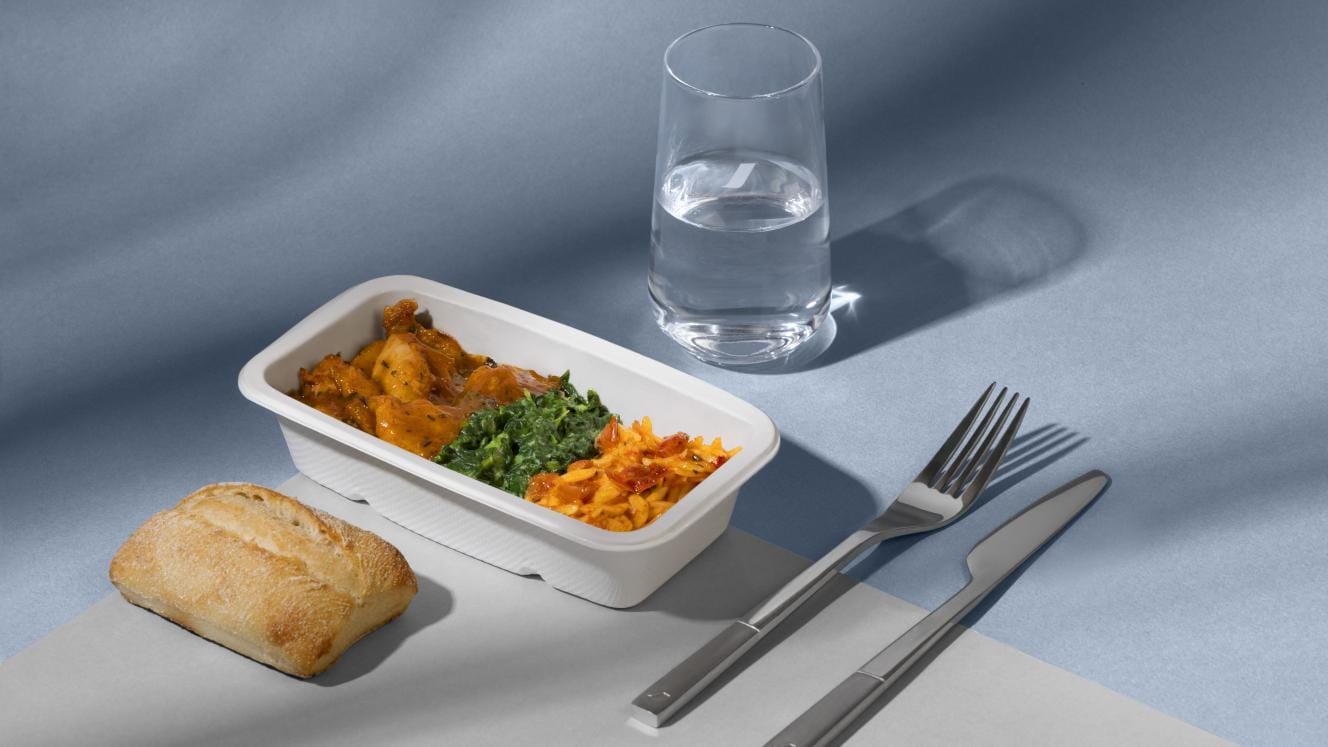
Air France recently overhauled its meal program in Economy. Instead of a free sandwich, passengers now have several Buy-on-Board options. 📷️ Courtesy of Air France
Turning meals into margins: The business case for retail-grade inflight dining
For years, airlines treated passenger meals as a necessary cost of doing business, an expense to be managed rather than a lever for growth. Inflight catering was viewed as a service obligation, something that kept customers satisfied but rarely created value.
That mindset is changing, as more carriers begin to see food and beverage (F&B) as a revenue driver and a key part of the brand experience. Inflight catering is no longer just about keeping costs down. It’s increasingly seen as a strategic profit center, one that delivers brand impact and demands retail precision.
With margins squeezed by rising fuel, labor, and sustainability costs, along with intensified competition, the onboard food & beverage channel is being recast as a revenue engine.
Why the shift matters
Market data underscore the opportunity. The global inflight-catering services sector is projected to grow from $15.16 billion USD in 2024 to $35.75 billion by 2032, expanding at a CAGR of 11.32%, according to Straits Research. Much of that growth is driven by rising passenger numbers, increased willingness to pay for quality onboard, and the commoditization of free meals on shorter journeys.
At the same time, research confirms that ancillary services, including onboard food & beverage, are now a material driver of profitability for airlines.
INDUSTRY INSIDER
Delta and José Andrés bring ‘a true taste of Spain to the skies’
Delta Air Lines has teamed up with celebrated chef José Andrés to radically elevate its premium-cabin dining, offering Spanish-inspired dishes like tortilla Española with pisto stew and braised short rib with smoky pepper sauce. The collaboration is designed not just for photo-worthy meals but to overcome the taste-dulling effects of altitude and bring “good taste” back to 30,000 ft. [AFAR]
The rise of plant-based options in airline catering
Airlines and passengers are increasingly embracing plant-based menus as these meals align with demand for lighter, more sustainable onboard dining. They're not just for vegans but for the growing swath of flexitarians and health-conscious flyers. For catering executives, this means it's no longer enough to offer a token vegan meal. Plant-based options need to be scalable, flavor-forward and integrated into the core menu experience. [World Travel Catering & Onboard Services]
Frequently flyer impressed by United’s new business-class menu
United Airlines’s business-class meal on the transcontinental Newark–Los Angeles flight recently featured a standout main of braised osso buco with risotto and asparagus, alongside fresh salads and premium bread service. The reviewer concludes that the major U.S. carrier has “finally upped its meal service game” on domestic premium flights. [Live & Let’s Fly']
A word from our partner

Airlines face major challenges in coordinating in-flight catering, as miscommunication between teams can lead to loading errors, delays, and wasted resources. Many still rely on outdated systems like printed documents or emails, which make real-time collaboration difficult.
Modern in-flight catering software streamlines operations by improving communication, reducing errors, and ensuring that meal provisioning runs smoothly—saving both time and money.
IFCS Aviation Galley Planner is the easiest way to monitor and control the operational functions related to inflight catering, menu planning, and galley loading.
TECH CHECK
Cathay Dining (the catering arm of Cathay Pacific) has overhauled its onboard food-waste process, allowing it to segregate leftover meals and turn organic waste into renewable energy. This system reduces electricity use by up to 70% and water use by 60%, while increasing food-waste recycling capacity by 200%. This initiative positions Cathay Pacific as a leader in inflight-catering sustainability, signaling that catering operations can contribute meaningfully to airlines’ broader environmental goals. [Matador Network]
Singapore Airlines expands digital inflight menus
Singapore’s flagship carrier now lets passengers view their in-flight digital menus up to six weeks in advance, extending the previous ~10-day window. While the menu-preview window has widened, the timeframe to pre-select your actual main-course remains at 15 days before departure. Take a look at the UX of the airline’s “Book the Cook” program. [The Mile Lion]
The One Chart You Need to Know
Without loyalty programs, airlines don’t make money at all

Source: Airline 10K statements; Aviation’s Week in Charts
The dirty secret about the aviation business is that airlines don’t really make money flying people around. In fact, if you remove revenues from frequent flyer programs, all of the major US carriers show a negative net operating profit margin.
Under this scenario, Southwest relies most on its loyalty program to generate real profits, while United is least reliant on its frequent fliers.
The big picture here is that brand loyalty is critically important for all airlines—and dining programs and inflight catering are a huge component of that.
To see the original chart & story, click here.
We want your feedback!
What stories would you like to see covered in The Galley? What trends are on your radar?
Reach out to [email protected] with your questions / comments / feedback.