- The Galley
- Posts
- Your Next Flight Could Serve the Best Meal of Your Trip
Your Next Flight Could Serve the Best Meal of Your Trip

Phat Chiem
September 29, 2025
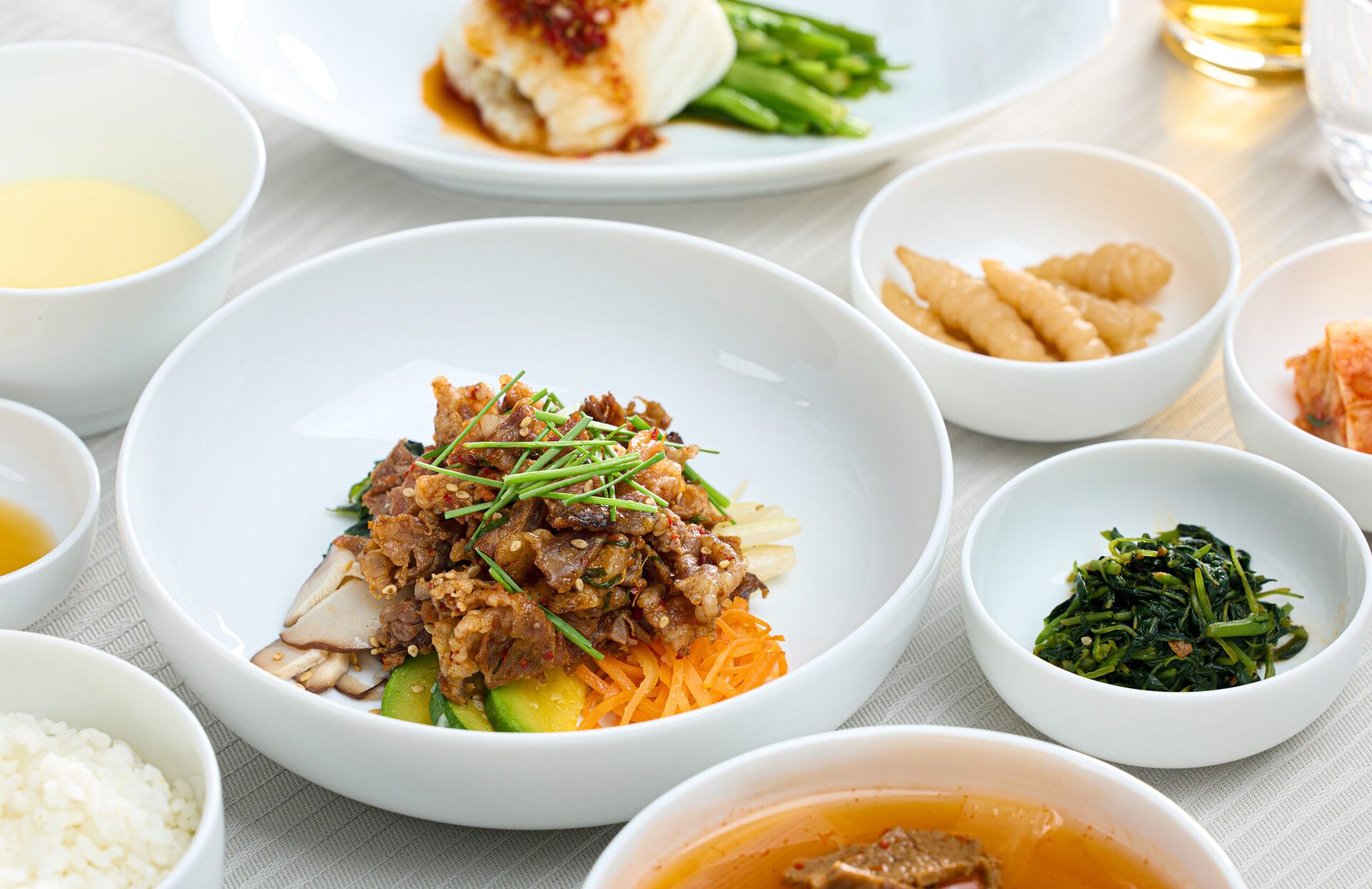
Braised beef brisket bibimbap, steamed ray fish 📷️ Courtesy of Korean Air
Airline food has a reputation problem—and airlines know it. But instead of accepting defeat at 35,000 feet, carriers are betting that regional flavors and chef-driven partnerships can turn their dining programs into differentiators. From ratatouille over the Atlantic to miso butterfish across the Pacific, airlines are leaning into regional and global cuisine as a gateway to culture and a way to inspire customer loyalty.
Destination on a plate
American Airlines' summer European routes now match meals to destinations: Mustard-crusted lamb for UK flights, peppercorn short rib for Ireland, or spaetzle and schnitzel for flights to Germany. On South America routes, the airline incorporates Caribbean red mojo sauce and Peruvian aji amarillo marinades, bringing regional authenticity to business and premium economy cabins.
When so much of flying feels identical—the same seats, the same screens, the same safety demonstrations—food becomes one of the few sensory experiences that can surprise you. A standout dish is memorable in ways that the onboard WiFi just can’t match.
West Coast flavor takes flight
Alaska Airlines has turned its First Class cabin into a rotating chef showcase with Chef's (tray) Table, a program featuring seasonal menus from celebrated West Coast culinary talent. The initiative launched after a successful collaboration with San Francisco's James Beard Award-winning Chef Brandon Jew, and now includes Chef Brady Ishiwata Williams of Seattle's Tomo restaurant. Williams' menu features dishes like mochi waffle and fried chicken with apple miso butter, and Klingemann Farms glazed short rib with serrano jaew sauce—food that reflects his Japanese American heritage and Pacific Northwest roots.
Chef Jew's spring menu puts a cultural twist on familiar favorites, featuring Hong Kong French toast and tea-smoked soy chicken with ingredients like Wycen Foods' Lap Cheong—traditional cured meat from a San Francisco Chinatown specialty shop—and sustainably raised Stemple Creek Ranch beef. It's hyper-local sourcing that showcases the Bay Area’s culinary heritage while reinforcing Alaska's commitment to regional partnerships.
Chef collaborations continue to expand
Hawaiian Airlines appointed husband-and-wife team Wade Ueoka and Michelle Karr-Ueoka, owners of Honolulu's MW Restaurant and Artizen, as executive chefs to oversee the carrier's menus. Their Featured Chef Series brings dishes like miso butterfish and shoyu-ginger chicken to international flights between Hawaii and Asia, showcasing island flavors for passengers crossing the Pacific.
Now under Alaska Air Group ownership, Hawaiian's chef-driven approach could be a template for how to preserve regional identity even as carriers consolidate. Food becomes both brand statement and cultural bridge.
Korean Air bets on authenticity
Korean Air is betting big on cultural authenticity with a menu overhaul centered on Korean classics. Working with Chef Seakyeong Kim of Seoul's fine-dining restaurant Cesta, the airline now serves bibimbap variations across all cabins—salmon, octopus, brisket, even deodeok (wild mountain root). First Class gets Chilean seabass wrapped in zucchini and braised beef brisket bibimbap. Economy passengers can choose beef bulgogi or braised pork and kimchi with rice alongside vegetarian options like tofu pad thai and rosé pasta.
The move is strategic: serving over 50,000 meals daily across 100+ international routes, Korean Air is using food to reinforce national identity while appealing to global tastes. For the first time, kimchi is available in all cabin classes—a small detail that signals bigger ambitions about showcasing Korean cuisine on the world stage.
The logistics challenge
Of course, great-sounding menus don't always translate at altitude. Taste buds dull in pressurized cabins. Textures change. Timing matters: Dishes need to survive prep, holding, and reheating without turning to mush. Airlines must balance ambition with the physics of flight service.
Then there's cost. Regional sourcing, chef partnerships, and diverse ingredients aren't cheap. Premium cabins can absorb the investment, but economy passengers—where margins are thinnest—still face a harder sell. American's Buy-on-Board economy menu now includes options like Tray Table Tapas with olives, dried apricots, beef jerky, pistachio, white cheddar dip, pita chips, and brownie brittle, but you're paying for it.
What comes next
The trend is accelerating. Expect more chef collaborations anchored to hub cities, more destination-specific menus that change by route, and deeper integration of dietary preferences—not as afterthoughts, but as core offerings tied to regional flavors.
Airlines are also starting to think seasonally, tapping local agriculture and shorter supply chains for fresher, less processed fare. It's early, but the direction is clear: food is no longer filler. It's part of what makes the journey truly memorable.