- The Galley
- Posts
- Turning meals into margins: The business case for retail-grade inflight dining
Turning meals into margins: The business case for retail-grade inflight dining

Phat Chiem
October 30, 2025
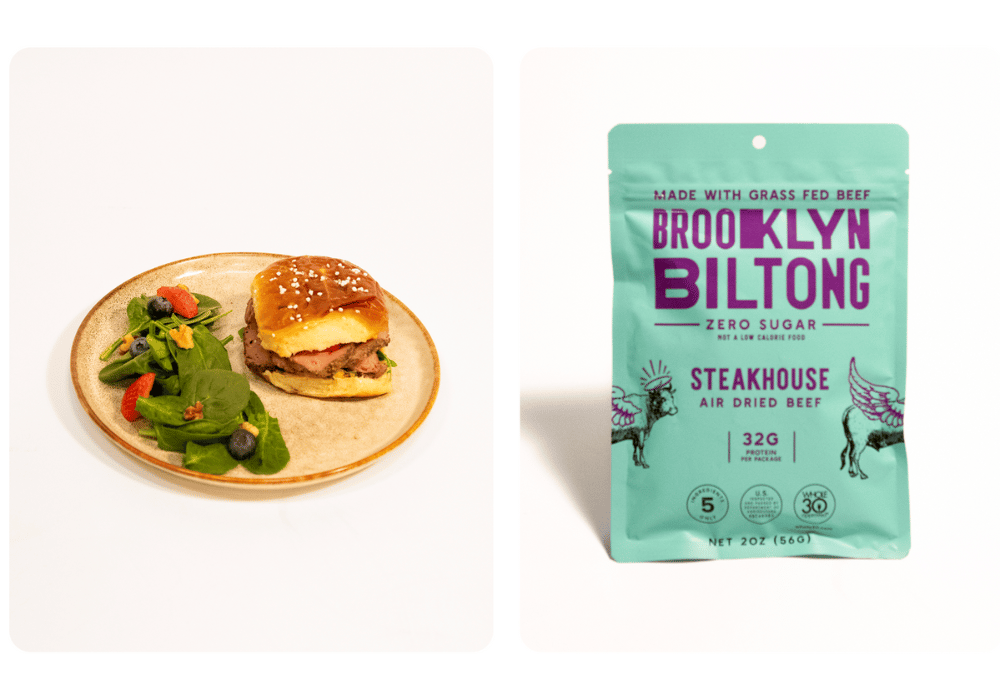
American Airlines recently expanded its Buy-on-Board offerings with mini sliders, premium beef jerky, tequila, and tapas. 📸 Courtesy of American Airlines
For years, airlines treated passenger meals as a necessary cost of doing business, an expense to be managed rather than a lever for growth. Inflight catering was viewed as a service obligation, something that kept customers satisfied but rarely created value.
That mindset is changing, as more carriers begin to see food and beverage (F&B) as a revenue driver and a key part of the brand experience. Inflight catering is no longer just about keeping costs down. It’s increasingly seen as a strategic profit center, one that delivers brand impact and demands retail precision.
With margins squeezed by rising fuel, labor, and sustainability costs, along with intensified competition, the onboard food & beverage channel is being recast as a revenue engine.
Why the shift matters
Market data underscore the opportunity. The global inflight-catering services sector is projected to grow from $15.16 billion USD in 2024 to $35.75 billion by 2032, expanding at a CAGR of 11.32%, according to Straits Research. Much of that growth is driven by rising passenger numbers, increased willingness to pay for quality onboard, and the commoditization of free meals on shorter journeys.
At the same time, research confirms that ancillary services, including onboard food & beverage, are now a material driver of profitability for airlines.
What the change looks like in practice
For catering operations, the shift from cost to revenue means three things:
1. Merchandising mindset: More carriers are treating the galley trolley like a retail outlet: premium coffees, local-chef signature meals, curated snack bundles, branded beverage partnerships.
On short-haul routes, we’re seeing more “buy on board” (BoB) models, where passengers pay for what they want rather than being given a standard included meal. Air France and KLM both announced last year that they would be moving entirely to a BoB catering scheme for short-haul.
Meanwhile, American Airlines expanded its BoB offerings for economy class this year by adding sliders, tapas, and premium tequila.
2. Operational leverage & technology: To treat catering as a retail opportunity, you need dynamic modelling: inventory control, waste analytics, pre-order via app, modular menus, selective value-add items. One catering supplier, Dubai’s dnata, described its buy-on-board business as requiring “like a retailer on the ground” mindset: “We must constantly evolve what we can offer our customers and their customers and always be ahead of the game, from digital capability to product design.”
3. Brand and experience leverage: When onboard F&B becomes part of the brand promise, rather than an after-thought, it supports higher-yield passengers, strengthens differentiation, and underpins strategy. Research shows that customers view onboard F&B among the most desired ancillaries (alongside extra legroom and seating upgrades) and are willing to pay for it when done well.
Many of the menu improvements are happening not in first class, but in economy class as airlines look to upgrade this cabin experience – for passengers willing to pay extra. For example, Virgin Australia recently rolled out salted grapefruit margaritas, Papa Salt gin palomas, chocolate waffles, and corn chips, all available for purchase in economy.
Action points for catering executives
Map which routes and classes are primed for revenue-shifting: premium economy, business class, long-haul vs short-haul.
Segment the menu: identify high-margin items (e.g., branded beverages, premium snacks) and differentiate them from commoditized “free” meals.
Invest in analytics & digital: pre-order systems, inflight catering software, dynamic pricing of ancillaries, redundancy in supply-chain.
Align with the airline’s wider ancillary-revenue strategy. It’s no longer just the galley’s job; it’s commercial.
Don’t ignore the fundamentals: cost control, waste-reduction, food-safety compliance still matter. You want profit, not just revenue.
Bottom line: For the inflight-catering ecosystem, the moment is now. If you’re still thinking of meals simply as a cost line to keep passengers “satisfied,” you’re missing a strategic pivot. Real value lies in treating that F&B moment at 30,000 ft as retail: a chance to deepen brand, drive spend, and boost margins. Because in an era of thin yields and intense competition, every ancillary dollar counts.