- The Galley
- Posts
- Why Airlines Are Doubling Down on the Middle Cabin
Why Airlines Are Doubling Down on the Middle Cabin
In partnership with


Premium economy has transformed from a modest upgrade into the airline industry's new sweet spot, offering business-class touches without the business-class price tag. Airlines like Singapore Airlines, EVA Air, and Virgin Atlantic now serve regionally inspired meals on real dishware, with curated wine lists and elevated service previously reserved for top-tier cabins. Keep reading to learn how this trend is changing dining programs across the industry.
Let’s dive in.


EVA Air’s new Premium Economy menu is served on real dinnerware with cutlery for an elevated experience. 📷️ Courtesy of EVA Air
Why Airlines Are Doubling Down on the Middle Cabin
You're settling into your premium economy seat on a trans-Pacific flight, and instead of the expected plastic tray with overcooked pasta, the flight attendant presents a meal on porcelain dinnerware featuring Thai-style crab curry, followed by black sesame cake for dessert. Your wine? Served in actual glassware, not a plastic cup.
This isn't business class. Welcome to the new premium economy cabin.
The sweet spot that changed everything
For years, premium economy was an awkward middle child for airlines: slightly bigger seats, marginally better meals, but nothing to write home about. Not anymore. The premium economy segment is growing at 9.6% annually, outpacing all other cabin classes, and airlines are finally paying attention.
Passengers have discovered that premium economy offers a compelling value proposition: significantly more comfort than economy and dramatically better food, all without the eye-watering price tag of business class. Airlines like Singapore Airlines, Virgin Atlantic, and EVA Air aren't just meeting this demand, they're setting a new standard for premium economy.
The airline that started it all
EVA Air created the world’s first premium economy class in 1992. It still serves as a model for the rest of the industry.
Nowadays, the premium economy experience at EVA starts with Boeing 787-9s reconfigured to hold 28 leather-swathed seats with an industry-leading seat pitch of 42 inches. On overnight flights, passengers get amenity kits stuffed with moisturizing cream and lip balm, socks, a comb, earplugs, and a sleep mask.
Then there’s the onboard dining. EVA offers a selection of thoughtful dishes that blend traditional Asian flavors and innovative modern cuisine. Meals are served on dishware with real cutlery. In mid-2024, the airline started serving Kanpai Group’s famous Japanese-style barbecue meals on US routes.
It’s also the same year EVA Air won SKYTRAX's "Best Premium Economy Class Airline Catering" award, illustrating to the industry that restaurant-quality food belongs in this cabin class.
INDUSTRY INSIDER
SWISS refines dining program from top to bottom
Starting in economy and premium economy, Lufthansa Group carrier SWISS has been busy overhauling its entire dining program. Next up are the first and business class cabins. SWISS is paying attention to the details, such as placing plates directly on the tray table instead of on a separate tray. The traditional nut snack will now include a fresh element like olives. New tableware is being developed, and the snack and beverage options have been expanded. [One Mile at a Time]
Airlines make culinary upgrades to tap into Japan’s tourism boom
Amid Japan's record-breaking tourism recovery, carriers in the region are investing heavily in food and beverage programs to win over high-value flyers. For example, ANA’s Connoisseurs gourmet program invites top chefs to create dishes that articulate the Japanese concept of shun (peak season for ingredients). Other offerings include exquisite sakes, fine wines, and excellent traditional tea service. [The Japan Times]
Cheese may be the next frontier in passenger experience
At the recent IFSA EXPO 2025, airline catering supplier En Route announced it was launching a dedicated U.S. inflight cheese program to elevate onboard dining by featuring curated, regionally sourced cheeses. Designed for all cabin classes, the program offers seasonal rotations, storytelling elements, and adaptable packaging to deliver a consistent yet personalized experience that highlights provenance, indulgence, and culinary culture. [APEX]
A word from our partner

Airlines face major challenges in coordinating in-flight catering, as miscommunication between teams can lead to loading errors, delays, and wasted resources. Many still rely on outdated systems like printed documents or emails, which make real-time collaboration difficult.
Modern in-flight catering software streamlines operations by improving communication, reducing errors, and ensuring that meal provisioning runs smoothly—saving both time and money.
IFCS Aviation Galley Planner is the easiest way to monitor and control the operational functions related to inflight catering, menu planning, and galley loading.
TECH CHECK
Korean Air switching to sustainable meal containers
Korean Air will begin replacing plastic meal containers with plant-based packaging made from agricultural waste like straw, sugarcane, and bamboo starting this month, with full rollout expected by the end of 2026. This switch—targeting economy-class entrées—is part of a broader sustainability push and is expected to cut related carbon emissions by about 60%. [AeroTime]
Why aviation's AI future hinges on data quality
AI has the potential to revolutionize aviation operations, from ticketing to inflight catering, but its success depends on the quality, accuracy, and consistency of the underlying data. Without reliable data inputs, AI models can misfire, leading to inefficiencies or poor decision-making. As airlines adopt more AI-driven tools, ensuring data integrity is becoming a top strategic priority. [OAG]
The One Chart You Need to Know
Elevating the airline passenger experience in 2025
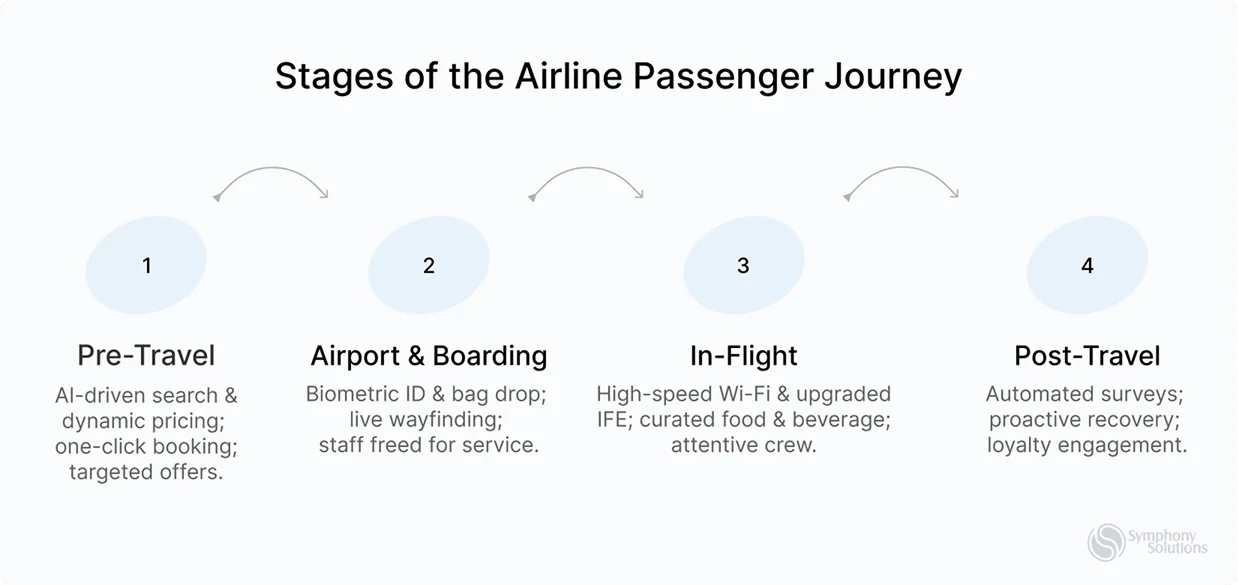
Source: Symphony Solutions
Digital transformation is reshaping the airline industry by enhancing operational efficiency and improving the passenger experience through AI, data analytics, and cloud technologies. Airlines are leveraging these tools to offer more personalized services, optimize pricing, streamline operations like food & beverage, and improve customer engagement across touchpoints. The focus is shifting from just moving passengers to delivering seamless, tech-enabled travel experiences.
To see the original chart & story, click here.
We want your feedback!
What stories would you like to see covered in The Galley? What trends are on your radar?
Reach out to [email protected] with your questions / comments / feedback.