- The Galley
- Posts
- The taste of travel: Airlines turn to menus that tell a story
The taste of travel: Airlines turn to menus that tell a story
In partnership with


Airlines are turning into brand storytellers, with carriers leaning into regional and global flavors to capture the attention (and loyalty) of their best customers. Regional sourcing, chef partnerships, and destination-driven menus are creating a sense of place while meeting diverse dietary needs. The trick is differentiating without blowing budgets, and engineering dishes that hold up at altitude and fit tight service flows. The bottom line: The tray table is where the best memories are being made in aviation right now.
Let’s dive in.

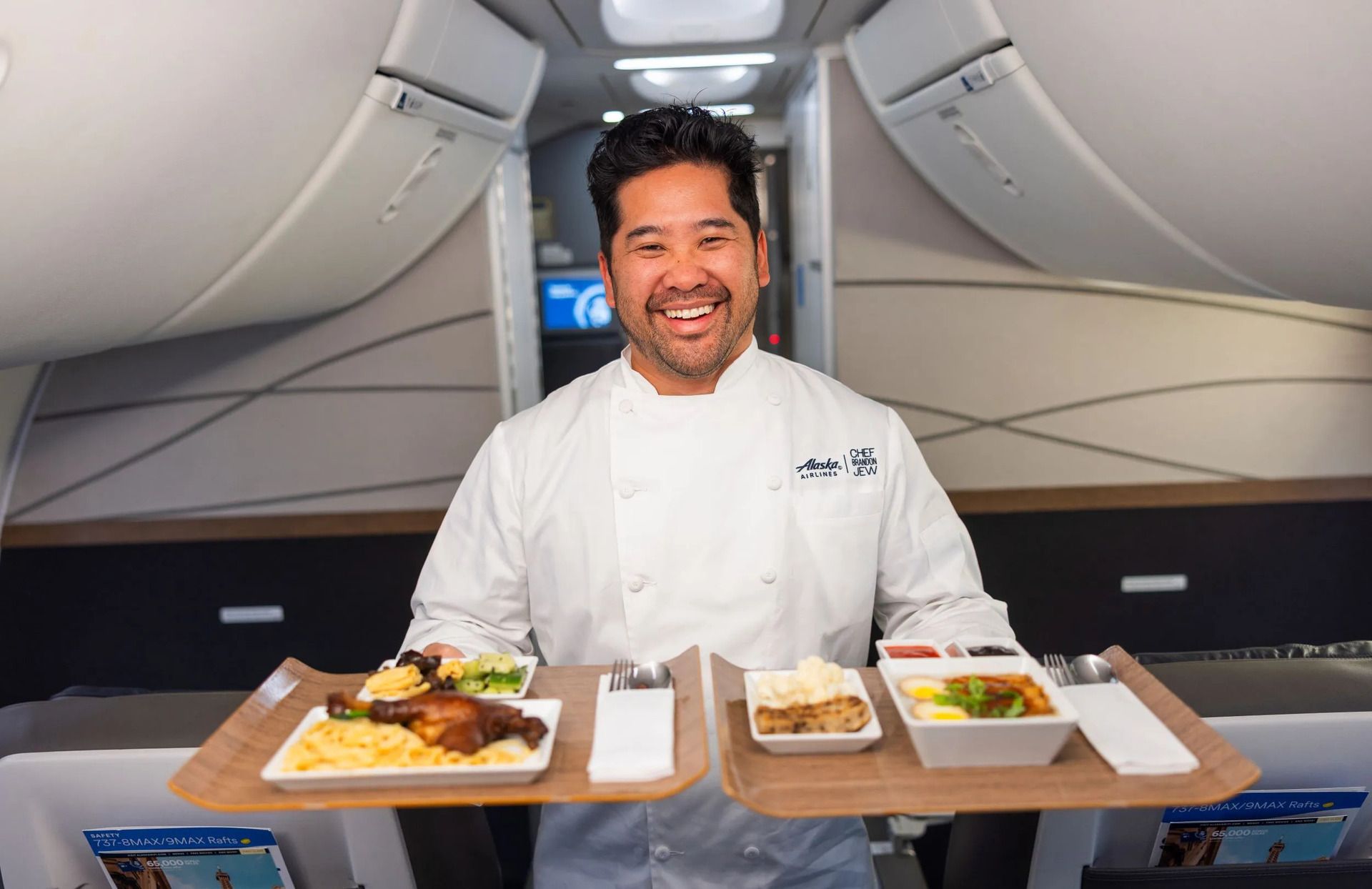
Chef Brandon Jew of Michelin-starred Mister Jiu’s leans into his Chinese heritage for Alaska Airlines’ revamped First Class menu 📷️ Courtesy of Alaska Airlines
Your next flight could serve the best meal of your trip
Airline food has a reputation problem—and airlines know it. But instead of accepting defeat, carriers are betting that regional flavors and chef-driven partnerships can turn their dining programs into differentiators. From ratatouille over the Atlantic to miso butterfish across the Pacific, airlines are leaning into regional and global cuisine as a gateway to culture and a way to inspire customer loyalty.
Destination on a plate
American Airlines' summer European routes now match meals to destinations: Mustard-crusted lamb for UK flights, peppercorn short rib for Ireland, or spaetzle and schnitzel for flights to Germany. On South America routes, the airline incorporates Caribbean red mojo sauce and Peruvian aji amarillo marinades, bringing regional authenticity to business and premium economy cabins.
When so much of flying feels identical—the same seats, the same screens, the same safety demonstrations—food becomes one of the few sensory experiences that can surprise you. A standout dish is memorable in ways that the onboard WiFi just can’t match.
West Coast flavor takes flight
Alaska Airlines has turned its First Class cabin into a rotating chef showcase with Chef's (tray) Table, a program featuring seasonal menus from celebrated West Coast culinary talent. The initiative launched after a successful collaboration with San Francisco's James Beard Award-winning Chef Brandon Jew, and now includes Chef Brady Ishiwata Williams of Seattle's Tomo restaurant.
Williams' menu features dishes like mochi waffle and fried chicken with apple miso butter, and Klingemann Farms glazed short rib with serrano jaew sauce—food that reflects his Japanese American heritage and Pacific Northwest roots.
INDUSTRY INSIDER
Looking back at APEX/IFSA Global Expo 2025
In case you missed it, the Long Beach confab (Sept 9–11) attracted a bigger-than-usual crowd of approximately 2,500 airline and supplier leaders who gathered to preview F&B, retail, and service innovations. The trade show highlighted the industry’s momentum around personalization and AI-powered inflight digital innovation. Also, see who won the 2026 APEX Awards, including for Best Food & Beverage. [Aircraft Interiors Int’l]
The world’s best business class airline lounges for food
Airlines are turning their attention and innovation to lounge dining as well as their inflight menus. Skytrax has released its 2025 list of the top 10 business class lounges for catering. Key differentiators include à la carte dining, chef partnerships, and premium beverage programs. See who took the top honors. [Aviation A2Z]
American Airlines turns up the global flavors
The major U.S. carrier is expanding destination-inspired dining to Oceania and South America routes, with new Flagship Business entrées (e.g., sweet chile sea bass, Kona-crusted beef filet) and complementary options across cabins. The program builds on a summer European launch to align onboard menus with route provenance. [American Airlines]
A word from our partner

Airlines face major challenges in coordinating in-flight catering, as miscommunication between teams can lead to loading errors, delays, and wasted resources. Many still rely on outdated systems like printed documents or emails, which make real-time collaboration difficult.
Modern in-flight catering software streamlines operations by improving communication, reducing errors, and ensuring that meal provisioning runs smoothly—saving both time and money.
IFCS Aviation Galley Planner is the easiest way to monitor and control the operational functions related to inflight catering, menu planning, and galley loading.
TECH CHECK
Lufthansa cuts 4,000 jobs in AI push
AI is transforming the aviation industry from top to bottom. In the latest development generating global headlines, Lufthansa announced this week that it is eliminating to cut 4,000 jobs as the airline turns to AI to boost efficiency. Lufthansa’s cuts are part of a broader push that prioritizes digitization, AI, and automation, placing it among a growing cohort of companies citing AI as central to their restructuring plans. [CNBC]
The most forward-thinking airlines are putting AI workflows at the core of their operations. BCG lays out a three-phase path (deploy, reshape, invent) to embed AI across commercial and operational workflows. These initiatives could drive 20–40% efficiency gains while improving CX. [BCG]
The One Chart You Need to Know
Airline cabin waste per passenger per flight
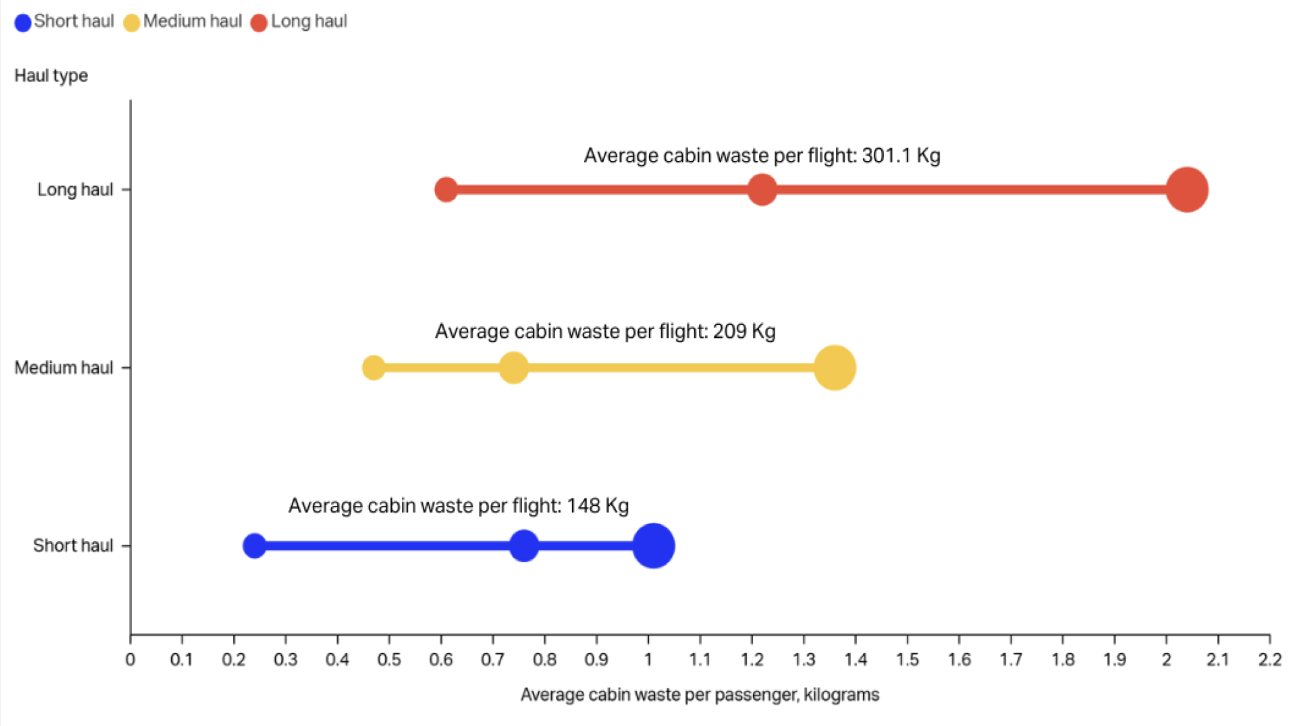
Source: IATA
Anytime an airline can cut waste it also adds to its bottom line. An IATA audit has found that cabin waste varies widely by flight length, averaging 237.3 kg per flight (0.94 kg per passenger). Carriers can cut disposal costs by prioritizing reuse, recycling, and recovery while closely tracking and reducing waste at the source.
Read more about the IATA’s Sustainable Cabin initiative.
We want your feedback!
What stories would you like to see covered in The Galley? What trends are on your radar?
Reach out to [email protected] with your questions / comments / feedback.