- The Galley
- Posts
- Why Preorders Are the Future of Inflight Catering
Why Preorders Are the Future of Inflight Catering
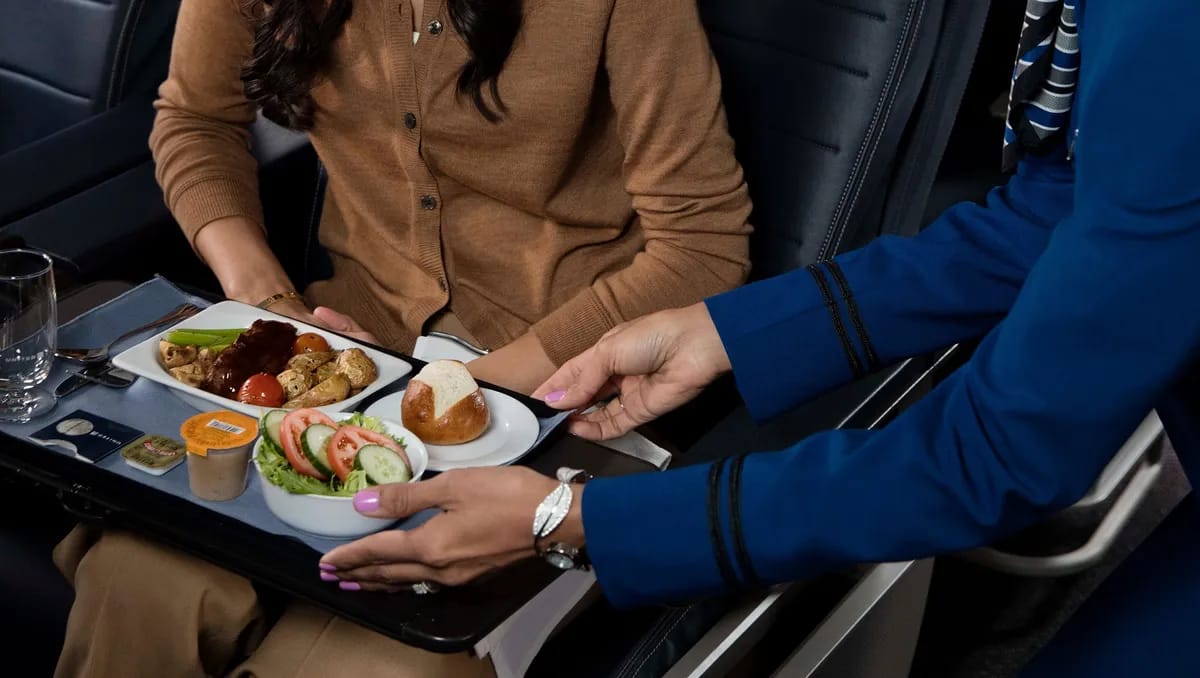
United will soon require passengers to preorder their economy class meals for long hauls across North America and the Caribbean 📷️ Courtesy of United Airlines
Starting this March, one of the largest airlines in the world will make a change to its provisioning process that could reshape how 380 million passengers eat in the air: Preorder your hot meal at least 24 hours ahead of your flight, or settle for a snack box onboard.
United Airlines announced in January that it will soon require economy passengers to pre-select their fresh meals on flights over 1,190 miles across North America and the Caribbean. The carrier says the move will improve operational efficiency on the ground and in the air.
In the process, United is fundamentally shifting how economy-class meals are being offered. It's a bold move that follows the airline's successful rollout of first-class pre-ordering in 2021, which boosted customer satisfaction scores by nearly 40%.
“In addition to ensuring customers get the meals they want and improving catering efficiency, enabling customers to pre-order meals is expected to help United’s food-waste reduction efforts by helping minimize unconsumed fresh retail items,” United said in a statement. “This approach is anticipated to keep more than 100,000 pounds of unused food out of landfills each year.”
The shift also gives the airline far greater certainty over what gets cooked, loaded, and served. And it turns inflight catering from a cost-heavy, wasteful guessing game into a system shaped by real demand.
The waste problem airlines can't ignore
For decades, airlines have been loading planes with educated guesses about what passengers might want, leading to massive overages—over a billion pounds of unconsumed airline food worldwide annually, according to figures from the IATA.
The old model was broken: caterers would prepare hundreds of meals per flight, flight attendants would run out of popular choices midway through the cabin, and rejected meals end up in waste bins destined for incineration. Too much food, too little satisfaction, and all that extra weight burning extra fuel.
Singapore Airlines pioneered a potential solution decades ago with its "Book the Cook" program, now considered the gold standard. Passengers in premium cabins can choose from an extensive menu—lobster thermidor, beef rendang, even regional specialties like tonkotsu ramen from Tokyo—up to six weeks before departure. The service covers 33 airports for business class alone and guarantees your meal shows up exactly as ordered.
Europe embraces the pre-order revolution
Lufthansa Group recently launched its "Culinary Journey" platform across Lufthansa, SWISS, and Austrian Airlines. The system offers seamless meal planning even for connecting flights between different carriers. A passenger flying Austrian from Vienna to Frankfurt, then Lufthansa to New York, can pre-select meals for both legs in one session.
SWISS took things further in May 2025, extending pre-orders to short-haul business class flights from Geneva. The airline added two exclusive dishes to the menu, including Zurich-style sliced veal—a selection so popular on long-haul routes that Geneva passengers were demanding it. Economy passengers on short hops get a 10% discount for ordering fresh items like sandwiches and salads in advance.
The result: more choice for passengers, better resource planning for airlines, less waste for everyone.
Planning ahead in an unpredictable world
Here's where the system hits turbulence. Air travel rarely goes according to plan. Tight connections become missed connections. Same-day flight changes happen. First-class upgrades clear at the gate. Weather delays push your 11 a.m. departure to 4 p.m., turning your breakfast order into an awkward lunch.
United's 24-hour cutoff works fine if you're organized and your itinerary is stable. But business travelers who book flights the night before, or passengers navigating irregular operations, could find themselves stuck with crackers and cheese while watching others enjoy their pre-ordered burgers.
Alaska Airlines has made the system work on its routes, but Alaska runs a simpler operation than United's sprawling hub network. How will United's IT infrastructure handle the complexity when weather slams Newark or a mechanical issue in Denver cascades through dozens of connections?
Where this is heading for inflight catering
The trend is clear: pre-ordering isn't a premium cabin perk anymore. It's becoming the baseline expectation across economy cabins worldwide. KLM is using AI to estimate precise meal counts per flight. Lufthansa sells discounted meals on the day's final flights to move inventory. Etihad has installed a biodigester that processes over a ton of organic waste daily into grey water.
Airlines are getting creative because the economics demand it. Every uneaten meal represents lost revenue and disposal costs. Every empty tray loaded on the aircraft is wasted fuel. Pre-ordering solves both problems while giving passengers agency over their experience.
United's gamble is that most travelers will adapt to the new system, appreciate the certainty, and embrace the sustainability benefits. The airline has the data from its first-class rollout to back that bet. But the real test comes in March when hundreds of thousands of economy passengers discover their options just got more limited—or more predictable, depending on how you look at it.