- The Galley
- Posts
- Five Ways AI Is Reshaping Airline Catering Operations
Five Ways AI Is Reshaping Airline Catering Operations
In partnership with


AI is changing galley planning from a static, spreadsheet-heavy back-office job into something much more dynamic and valuable for airlines. With machine learning, airlines can forecast demand more accurately, automate loading and layout decisions, coordinate more easily with caterers and crew in real time, and use actual consumption data to cut waste while improving service. The airlines that start treating galley planning as a strategic part of the operation, rather than just an administrative task, have a real opportunity to reduce waste, run more smoothly, and make more money on every flight.
Let’s dive in.

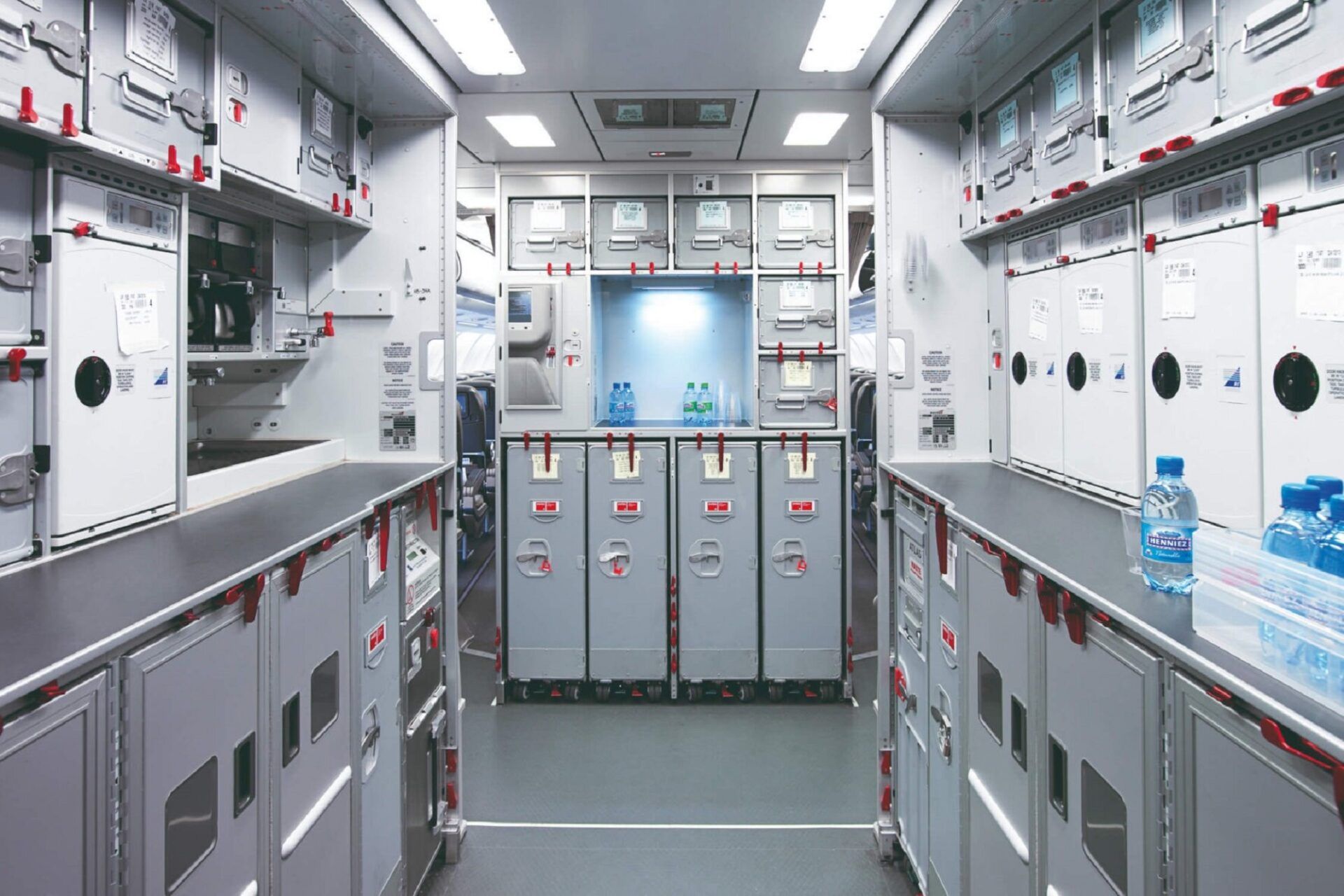
5 ways AI is transforming galley planning
Every flight that departs with too many meals, a misplaced trolley, or a crew scrambling to find a special request represents a failure that started on the ground.
Galley planning — the unglamorous process of deciding what goes on the aircraft, where it goes, and how it supports service — has been held together for decades by spreadsheets, loading guides, and institutional knowledge. That was fine when onboard service was standardized. It is a lot less fine now, when passenger no-shows fluctuate, special meal requests have proliferated, pre-orders add flight-specific complexity, and catering is increasingly tied to retail revenue.
The gap between what galley planning currently is and what it needs to be is where AI comes in.
The following are 5 ways in which AI can, and already is, having a transformative impact on airline catering operations.
1. Smarter demand forecasting: loading what you actually need
The traditional approach to provisioning is essentially defensive: load for full capacity and accept the waste. Forward-thinking airlines are beginning to use machine learning to embrace dynamic provisioning — loading only what's needed based on real-time consumption analytics. KLM has gone further still: its TRAYS system uses AI to predict how many booked passengers will actually board, and even predicts which passengers won't make connecting flights, so those meals are never loaded in the first place. The airline reports waste reductions of up to 63% as a result.
2. Automated layout logic: eliminating the manual mapping problem
Once you know what to load, you still have to figure out where everything goes. On complex routes with multiple cabin classes, aircraft types, and service concepts, manually mapping carts, containers, and trolleys to galley compartments is slow, error-prone, and difficult to standardize across stations. AI-powered platforms can automatically apply preset business rules. They can integrate machine learning to produce accurate supply plans for all provisioned items and recommend the most efficient suppliers, ordering times, and distribution methods, while synchronizing inventory and equipment data across hubs and flights in real time. The result is fewer packing errors, more consistent execution, and less firefighting on departure day.
INDUSTRY INSIDER
What to expect at WTCE 2026 in Hamburg
The World Travel Catering & Onboard Services Expo (WTCE) returns to Hamburg Messe April 14-16, 2026. With representatives from many major carriers expected to attend, more than 300 exhibitors are preparing to showcase their latest innovations in onboard hospitality products and services during the three-day industry event. New this year are dedicated zones, including the Drinks Zone and the Discovery Zone. [Aircraft Interiors International]
gategroup buys 75% of KLM catering services
gategroup is acquiring a 75% stake in KLM Catering Services, with KLM retaining 25%, in a deal aimed at creating a long-term strategic partnership for inflight catering at Amsterdam Schiphol. The agreement combines gategroup’s global catering scale and expertise with KLM’s local operating experience, while allowing KLM to focus more tightly on its core airline business. [Airways Mag]
United partners with Netflix’s Chef’s Table to upgrade Polaris dining
United Airlines has partnered with Chef’s Table, the Netflix culinary brand, to create 10 exclusive new meal experiences for its Polaris international business class. The program brings together 11 chefs from four continents, with menus inspired by United hub cities and key international gateways including Chicago, Los Angeles, London, Tokyo, and São Paulo. Participating Michelin-starred chefs include Nancy Silverton, David Barzelay, and Tomos Parry. [Business Traveller]
Air Europa’s new Business Class concept combines comfort with cuisine
Air Europa unveiled a new Business Class concept in March 2026 that puts gastronomy and sustainability at the center, including a menu created by Martín Berasategui. Each meal is served on elegant tableware embossed with the Air Europa seal. This fits the wider trend of airlines using chef partnerships and elevated food service as a brand differentiator. [Onboard Hospitality]
A word from our partner

Airlines face major challenges in coordinating in-flight catering, as miscommunication between teams can lead to loading errors, delays, and wasted resources. Many still rely on outdated systems like printed documents or emails, which make real-time collaboration difficult.
Modern in-flight catering software streamlines operations by improving communication, reducing errors, and ensuring that meal provisioning runs smoothly—saving both time and money.
IFCS Aviation Galley Planner is the easiest way to monitor and control the operational functions related to in-flight catering, menu planning, and galley loading.
TECH CHECK
Vueling teams with gategroup on next-gen retail & catering
Vueling has chosen gategroup as its new onboard retail and catering partner across its network, with the partnership centered on a “360-degree” digital retail ecosystem designed to improve both customer experience and operational efficiency. The airline will use gateretail technology for real-time insights, analytics and digital touchpoints, while gategourmet and Evertaste will support more scalable, higher-quality meal and retail-on-board offerings for passengers as well as crew. [Future Travel Experience]
How technology is transforming the way Americans fly
U.S. domestic air travel in 2026 is being reshaped by a mix of biometric security, free in-flight Wi-Fi, AI-powered operations, and upgraded cabins. Among the highlights: TSA PreCheck Touchless ID to 65 airports, wider airline adoption of high-speed connectivity, and growing use of AI for predictive maintenance, route optimization, and disruption management. These technologies are making flying faster, more seamless, and more comfortable for passengers, while helping airlines improve reliability and efficiency. [AirGuide]
The One Chart You Need to Know
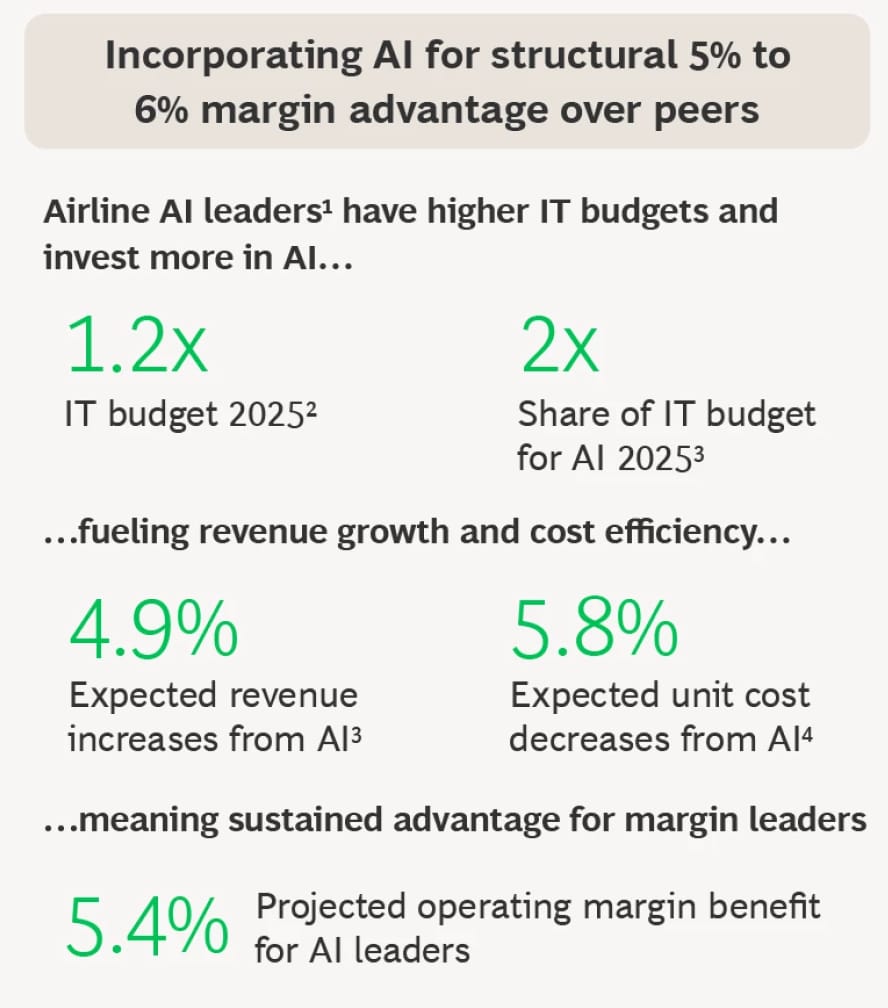
Air travel demand outlook for 2026: Revenues and costs are rising
BCG expects global air travel demand to rise 5.8% in 2026, following 6% growth in 2025, but the outlook comes amid mounting cost pressures and a more complex operating environment. Airlines are leaning on premium products, capacity discipline, new long-range narrowbodies, and AI-driven efficiency programs to protect margins and support revenue. Notably, the consulting firm found that airlines who are leaders in the use of AI technologies can expect to see an average 5.4% lift in operating margins.
To see the original chart & story, click here.
We want your feedback!
What stories would you like to see covered in The Galley? What trends are on your radar?
Reach out to [email protected] with your questions / comments / feedback.